
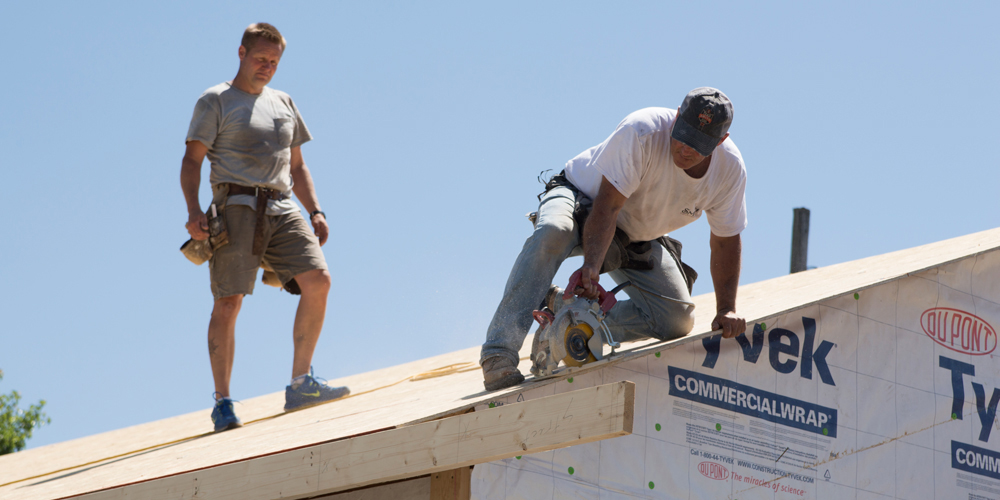
 Dubuque/Jackson County Habitat for Humanity & the Dubuque Home Builders and Associates work on a house during National Blitz Build Week in 2016. Dupaco sponsored lunch for all of the workers and got to witness the incredible progress they made in just a day’s time. (M. Blondin/Dupaco photos)
New home construction financing: What you need to know
Updated Sept. 26, 2025, at 1:35 p.m. CT
Building your own home has its perks. With new home construction, you call the shots. How many bedrooms and bathrooms do you wish you had? Where would you put them? What does your dream kitchen look like?
You make your home your own—literally—from the ground up.
But unless you have an unlimited supply of savings stashed away, you’ll probably need to borrow money for the construction phase. Financing new home construction is different from buying an existing home.
Of course, there are pros and cons to building your home. So knowing more about the process—and how financing the endeavor works—can help you decide whether new home construction is right for you.

What is a construction loan and how does it work?
A construction loan is designed to cover the costs of building your home. These loans can go by different names, depending on the lender you use. And each lender’s loan has its own terms and requirements.
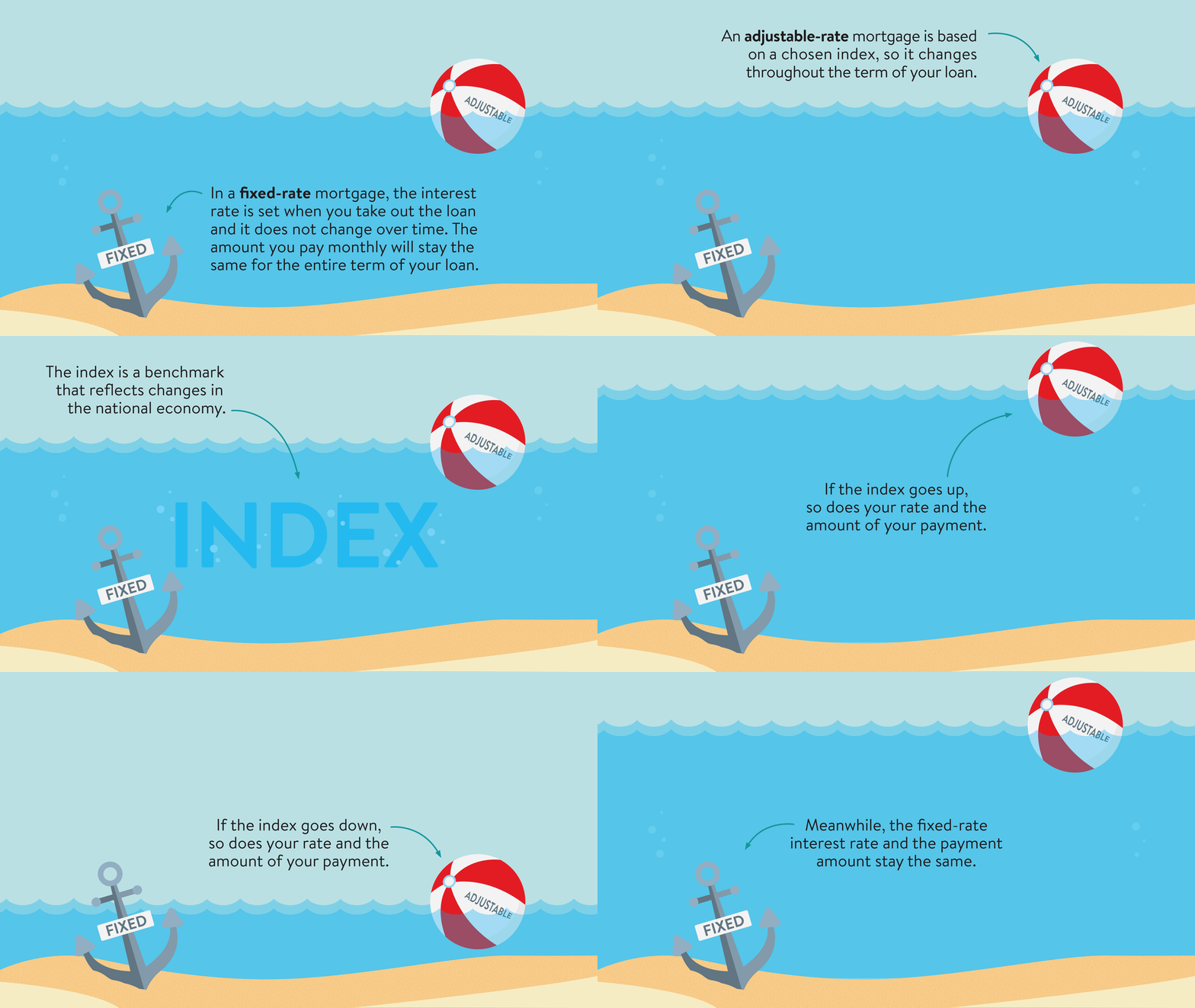
At Dupaco, borrowers take out what’s called a one-year adjustable-rate mortgage (ARM), which is also called a 1/1 ARM. This means the interest rate you pay on your loan balance can vary over the life of the loan.
Here’s how Dupaco’s construction loan works:
- You can fund up to 80% of the construction costs, including labor, materials or lot expenses.
- During the first 10 months, you withdraw money as construction invoices come in and are approved.
- Interest only accrues on the money you withdraw.
- During that 10-month period, you don’t have to make any payments.
- At month 11, you’ll pay the interest that accrued. And full loan repayment begins at month 12.
- Your interest rate stays the same for the first year. But it can adjust up to 2% annually after that. (Over the life of the loan, your interest rate will stay within 6% of the original rate.)
This setup helps you manage costs as the project progresses. Remember, each home construction loan can work differently depending on the lender. Make sure you understand your lender’s rules before you move forward.
How much money will you need upfront?
While the construction loan is there to help you through the construction phase, you’ll still need to contribute some money upfront.
Most lenders, including Dupaco, require at least a 20% down payment. This shows you’re invested in your project.
You’ll also need a special insurance policy, known as a builder’s risk insurance policy, while construction is happening, said Dupaco’s Jeann Digman, mortgage pricing and lending support specialist. Once your house is complete, your insurance agent can roll the policy into a regular homeowner’s insurance policy.
Who can build your house?
You’ll want to know who’s allowed to build your home. Some lenders don’t let you act as your own general contractor. At Dupaco, you have flexibility—you can hire a general contractor or serve as your own.
Track your construction bills and payments
Many general contractors work on a payment schedule tied to construction milestones, where you’re expected to make payments at different stages.
You’ll need to submit invoices to your lender to withdraw funds from your loan. This helps show how you’re spending the money. You also might need to have lien waivers signed each time you withdraw funds.
Know that some financial institutions charge you each time you withdraw funds from your loan (not the case at Dupaco). Find out what the lender’s policy is ahead of time.
Be prepared for inspections
During the construction process, your lender will schedule multiple inspections to check on the progress of your project.
“As we disperse those loan funds, we want to make sure they’re going into the house,” Digman said. “We need to see that construction is progressing.”
Talk to a lender about a construction loan >
Tips to keep your home construction on budget
Building your own home can be rewarding. But it’s a big undertaking—and it’s easy for costs to climb unexpectedly.
Here’s how to help stay on track:
Use reputable contractors
Know who you’re working with, and choose reputable contractors that you trust.
“You have to feel comfortable with who you’re working with,” Digman said.
While it can be tempting to go with the lowest bid, remember that you get what you pay for.

Expect it to cost more
Like any project, it’s easy for your costs to climb and wreak havoc on your budget.
Bids can increase. You might discover new, more costly, light fixtures. An unexpected expense can creep into the construction phase.
“We always tell homebuyers to borrow on the high side of what they think they’ll need,” Digman said. “Ninety-nine percent of the time, their final dollar is more than what they thought it would be.”
If the project costs less than your loan amount, great! You don’t have to use all of the loan funds, Digman said. But at least you have the money available if you need it.
Help keep your budget on track by always asking about the cost. If your builder suggests a new idea, ask how much that changes the price. If you have the money available and want to move forward, fine. Otherwise, consider whether it’s something you can do later.
Plan for delays
It’s best for your calendar—and your expectations—to prepare for the construction process to take longer than you think it will.
“They can’t predict the weather. And materials can go on back order,” Digman said. “There’s no guarantee the house will be ready when they think it will be. Anticipate it will take longer.”
Stay involved
Even if you hire a contractor, you’ll still need to remain hands-on throughout the process.
You’ll need to visit the construction site to check on the progress and make decisions. You’ll need to stay in contact with your lender as you request money. And you’ll have to stay on top of payments to both the contractor and, eventually, your lender.
“It can be stressful to build, and some people have a hard time projecting what something will look like unless they can see it,” Digman said. “But it can be rewarding too.”
Plan ahead for a smoother construction experience
The more prepared you are, the easier the process will be:
- Budget extra for unexpected costs.
- Understand your lender’s rules.
- Maintain open communication with your contractors and lender.