
 Members Stephanie and Jason Bergfeld settle into their new home with daughter, Natalie, in Dubuque,
Iowa. (M. Blondin/Dupaco photo)
Members Stephanie and Jason Bergfeld settle into their new home with daughter, Natalie, in Dubuque,
Iowa. (M. Blondin/Dupaco photo)
Could an adjustable-rate mortgage help you buy a home today?
Updated Sept. 29, 2025, at 10:55 a.m. CT
If you’re trying to buy a house today, it can feel like an uphill battle.
Even though interest rates aren’t climbing like they were a few years ago, they remain higher than many first-time buyers are used to in an already expensive market. So, it’s worth weighing all your borrowing options.
One option you may hear about? An adjustable-rate mortgage, or ARM, can sometimes make homeownership more affordable at the beginning. Here’s why: ARMs typically start with a lower interest rate than fixed-rate mortgages. For some homebuyers, that lower starting point is the key to getting into a home.
Learn how an ARM works—and what to consider when deciding whether it’s a good fit for you.
Could these small changes help you buy a house? >
How does an adjustable-rate mortgage work?
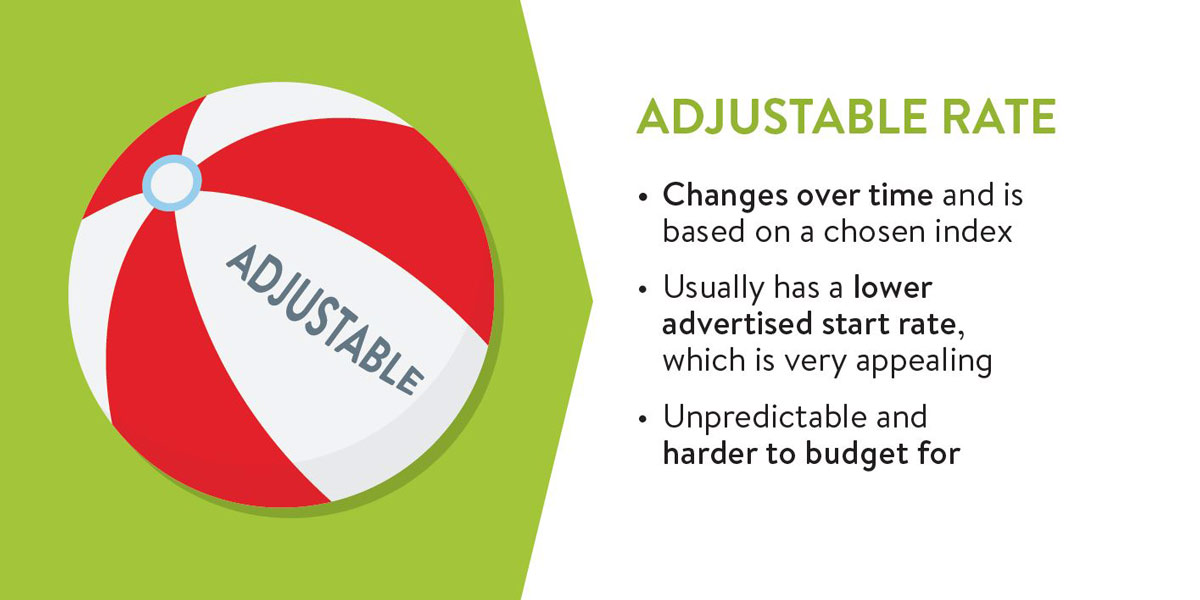
With an ARM, your interest rate is locked for a period and can then adjust annually over the life of your loan. That’s why ARMs are also called variable-rate mortgages—your rate can change at specific intervals.
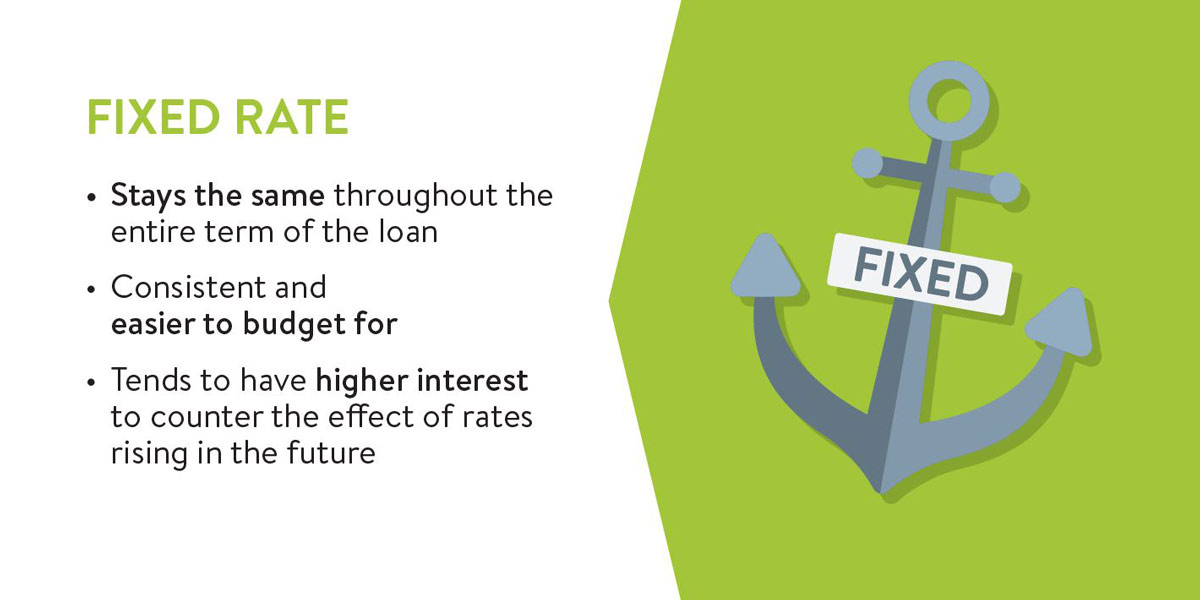
This differs from a traditional fixed-rate home loan, where your interest rate (and monthly payment) remains the same.
Why would you take out a loan where the interest rate can increase over time?
“The goal is to buy yourself a little time to hopefully refinance your loan and get into a better fixed-rate loan in the future,” said Dupaco Community Credit Union’s Erin Douglass, mortgage lending consultant supervisor.
What does a 5/1 ARM mean?
ARM loans’ names can look confusing. But once you know what the numbers mean, it’s easier to understand how they work.
Let’s use the example of a 5/1 ARM, amortized over 30 years:
- The first figure (5) is the number of years your initial interest rate is locked. You’re guaranteed that your rate will not change during this time.
- The second number (1) is how often your interest rate can change after that initial period.
- Amortized is the loan’s full term (if you keep it that long).
So, with a 30-year 5/1 ARM, your initial interest rate stays the same for the first five years of your loan. After that, your interest rate (and monthly loan payment) will adjust annually for the remaining 25 years of your loan based on what’s happening in the market.
But your interest rate can only adjust so much.
At Dupaco, for example, your interest rate won’t change more than 2% during each periodic adjustment. And it won’t change more than 6% over the life of the loan.
Explore our first-time homebuyer resources >
When can an ARM save you money?
During your home-buying search, you’ve probably noticed that ARMs have lower interest rates. (Fixed-rate loans tend to be higher to counter the effect of rates rising in the future.)
The ARM’s lower interest rate means you’ll save money by paying less interest each month during the lower fixed-rate period.
Everyone’s situation is unique. But here are some times when an adjustable-rate mortgage might be beneficial:
- You plan to sell your home soon. The adjustable rate won’t impact you after you sell your home.
- You plan to eventually refinance your home loan to get a better long-term loan. Again, the adjustable rate will no longer apply once your loan changes to a fixed rate.
- You plan to pay off your home loan before the adjustable rate begins. Maybe you’re receiving an inheritance or another lump sum that you plan to use to pay off your loan.
- You have room in your budget to accommodate a potentially fluctuating loan payment if you don’t qualify to refinance your home loan immediately.
Your fixed-rate period gives you time to decide what’s next:
- Sell your home.
- Stay in your home and pay off your loan.
- Stay in your home and refinance into a fixed-rate loan.
- Stay in your home and pay a higher interest rate (and payment).
“You have time to figure out what this home means to you,” Douglass said.
When is an ARM not a good idea?
An adjustable-rate mortgage isn’t right for everyone, though.
Ultimately, it depends on your financial security and comfort level.
With an ARM, it’s important to understand that you’ll eventually need to refinance your loan—or make higher monthly payments.
Knowing this, it’s good to ask yourself a few questions:
- What if I don’t qualify to refinance when my rate increases or I can’t sell my house right away? Could I afford to make a higher payment?
- Will I stay up at night not knowing what my future rate and payment will be?
- Do I have a plan that I’m comfortable with?
“If you think you’ll worry too much about it, it’s not right for you,” Douglass said. “They’re not for everybody. But if we aren’t at least having the conversation, we aren’t doing our job to educate you about all of your options.”
What to keep in mind with ARMs
Remember, you’ll need to eventually do something with your adjustable-rate loan—sell your home, pay off your loan, refinance it or pay a higher interest rate.
You’ll get notified when your interest rate will adjust.
But it’s your responsibility to take the next step. Contact your lender to discuss your options.
“This is not a loan that you can set and forget about it,” Douglass said. “You need to have an idea of what your plan is.”
And you don’t have to wait for your initial locked period to end to explore your options. Maybe interest rates go down, or you make great progress on your loan balance. These are great times to ask your lender if you should make any changes to your loan.
“Just because you get that fixed rate for a time doesn’t mean you have to keep it that whole time,” Douglass said. “It never hurts to reach out and ask your lender, ‘Does it make sense to do anything different with this?’”
Every buyer’s situation is different. If you’re wondering whether an ARM fits your plans, connect with a mortgage lender to talk it through.